
Debating Remote Work vs. Local For Your Business? Don’t Choose. Do This Instead.
If you’re stuck on whether to take your company remote or stay in the office, you’ve probably spent the last few years listening to all the pros and cons. But here’s what truly technology savvy companies understand. Nowadays, you don’t actually have to choose.
We see this all the time. The stale COVID-era “remote vs. local” debate holding leaders back and trapping them into thinking the choice is binary. The real question these days isn’t about where your team members work—it’s about how they work best. In today’s technological landscape, remote or in-office work doesn’t have to be a one-size-fits-all decision you only make once. It can be a flexible process you shift to fit the fluctuating needs of your business and employees.
To give you a better understanding of what we mean, in this blog, we’ll walk you through:
- Why the COVID-era binary remote vs office debate is no longer valid.
- How to figure out which roles and teams actually work better working remotely—and which ones don’t.
- How to keep your remote and hybrid employees satisfied, connected, and motivated.
Let’s get started.
Moving On From the COVID-Era Mindset
When COVID hit, it caused a mad rush to adapt and fully opened the Pandora’s Box of remote work almost overnight. Once the dust settled, many businesses faced a new debate: do we fully embrace this new way of working or try to put the genie back in the bottle?
This debate made the choice black-and-white—remote or in-office. But savvy companies quickly realized it didn’t have to be either-or. Instead, they started using the latest technologies and strategies to find arrangements that worked best for them and their teams. They stopped worrying about labels and started focusing on what really matters: finding the mix of remote work environments and on site collaboration that actually helps people do their best work.
Once you let go of the idea that you have to choose between a strictly remote workforce or an in-office workforce, you can focus on what really matters: flexibility. For most businesses today, that means a hybrid work model that gives your people the freedom to work in whatever location can maximize their productivity. In fact, according to Gallup, five in 10 full-time U.S. employees have remote-capable jobs, and businesses are taking advantage of it – 52% of those employees work in a hybrid set up, 27% are remote, and only 21% are fully on-site.
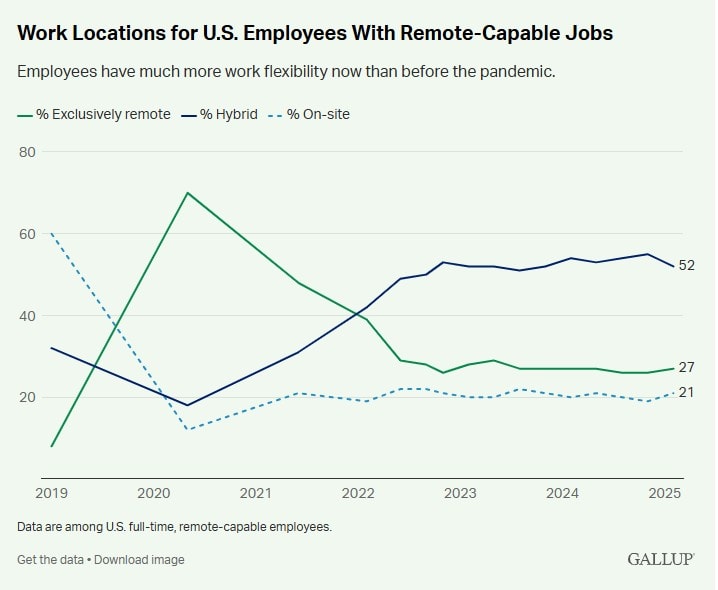
So if your business is among the minority that are still not taking advantage of hybrid or remote workforce, you are hindering your competitive advantage.
The Real Goal: Find What Works for Your Team
So, how do you implement this hybrid work model? Start here:
Get Clear on Your Goals
Before you decide who should be in the office and who can work remotely, think about what you’re really trying to achieve. Is it enhancing productivity? Lowering costs? Increasing employee satisfaction, work life balance, and retention? Maybe it’s a mix of all three. When you’re clear on what success looks like, you’ll be able to quickly make informed choices about where and how your remote employees and on-site staff work.
Identify Which Job Roles and Departments Work Best Where
Some roles thrive when people have more freedom and quiet focus, while others rely on close collaboration and in-person connection. From our experience helping various organizations implement hybrid solutions here’s what we’ve observed:
- Marketing and Design
- Creative roles can flourish working remotely, with space to brainstorm and test new ideas.
- In-person collaboration can spark fresh ideas, so occasional video calls and meetups may also help.
- Sales
- Many salespeople are a natural fit for remote jobs, since they regularly meet clients and travel.
- If your sales process is more of a team-based effort, time spent in the office might help foster collaboration and team building.
- HR
- Building relationships and supporting employees often works better on site.
- Remote interviews and onboarding, however, can work with the right communication tools and a thoughtful approach.
- Operations and IT
- These roles often need to be hands-on with equipment or support colleagues directly, so an office environment can help with operational efficiency.
- If your operations are mostly digital, remote work can still be an option.
- Accounting and Finance
- Data entry and analysis, can be done from anywhere.
- Complex financial decisions might benefit from in-person teamwork and quick collaboration.
The real takeaway? Every workforce has its own set of needs. Don’t assume one-size-fits-all. Whether it’s an in-office team or a remote team, the key is to offer them the environment they need to be successful. Then focus on managing your team in a way that keeps them supported and focused.
Managing Your New Hybrid Workforce
Once you’ve set up a flexible work environment, the real challenge begins: setting up a system that allows your management team to keep everyone communicating and focused on the same goal. To achieve this, you’ll need to:
Match People to the Right Work Environment
Not everyone is built for working remotely. Some employees thrive with the quiet of home, while others need the energy of an office environment. Some need immediate feedback and encouragement, while others work better with minimal oversight. Take the time to identify who will excel in which environment, and be ready to adjust. This isn’t a one-time decision, it’s part of ongoing monitoring that helps you support everyone.
Adapt Your Workforce Management Style
You also can’t manage remote workers the same way you manage people in the office. In person, you can rely on nonverbal cues and casual check-ins. With a remote workforce, you’ll need to be more deliberate about communication using video conferencing and other communication tools to check in and share feedback. Lead with trust, not micromanagement. Your job is to empower employees, no matter where they work, to succeed.
Build a Cohesive Company Culture
Your company culture doesn’t live in the office. It lives in how you communicate and build team level connections. In a traditional office, employees can easily see how things are done. When they work in different environments, they don’t get that “osmosis” so you’ll have to be more intentional about communicating expectations to new employees, providing opportunities for professional development, and encouraging open communication across the company so departments don’t get siloed and everyone stays aligned with your overall mission.
Use Workforce Management Software to Stay Aligned
The right workforce management software is the backbone of your strategy. It will help you track progress and keep your remote workers and in-office team connected without them feeling micromanaged. It also helps you identify patterns in you work processes, so you can continually adapt your methods to best support your employees.
The Payoff: Benefits of Embracing Flexibility
If you get this balance right, here’s what you’ll see:
Higher Productivity and Better Employee Satisfaction
When people can work in the environment that suits them best, employee performance improves. Employees who feel trusted and supported are typically also more engaged and motivated. This can also help prevent burnout and reduce turnover.
Lower Costs and More Flexibility
Flexibility also provides opportunities to reduce costs of office space, travel, and staffing. And remote work options open the door to a wider talent pool, letting you find the best people for the job—no matter where they’re based.
A Foundation for Long-Term Success
When you build a team that can pivot from remote work to in-office collaboration to anything in between, you’re setting up a system that can handle whatever the future throws at you. You’re always ready to shift with changing work patterns and support your people in ways that go far beyond a single project or quarter.
Real-World Examples: How This Works in Practice
Here are a few examples we’ve seen of companies embracing a hybrid work model and seeing immediate benefits.
An Accounting Firm Finds Balance and Higher Productivity
One accounting firm we worked with solved employee burnout during tax season. Long hours and tight deadlines left employees feeling disconnected from their families. When they shifted to a more flexible work model, they supported it with the right tools and mindset. Employees found they could wrap up reports from the sidelines of their kid’s soccer games or while traveling. This new approach didn’t hurt the bottom line. In fact, they saw higher productivity and a more motivated team.
A Tech Company Finds the Right Mix
One company we work with has offices across the country, and their approach to remote work is driven by what actually works for each department. Their local agency teams, like operations and IT support, are in the office because they need to be hands-on, fixing problems and working closely with clients. But their corporate marketing and national IT teams work remotely. By looking at what each job really needs, instead of sticking to a single model, they’ve built a flexible environment that keeps everyone connected and productive.
A Nonprofit Grows Its Mission by Expanding Its Reach
One nonprofit we worked with was deeply mission-driven, but they hit a dead end trying to find the right people locally. They needed employees who weren’t just skilled, but also believed in their specific cause. So they loosened their local-only hiring policies and opened up to remote employees across the country. By doing so they found people who were the perfect fit for their mission, regardless of their zip code. With the right remote work policies and tools to stay connected, they successfully built a remote workforce that shared their common purpose.
Crafting Your Strategy
Creating the right strategy for your business means resisting labels and taking the best of both in-house and remote work and weaving them together.
Start with Your Goals
Decide what you want to accomplish. Do you need to boost productivity? Improve employee engagement? Maybe you’re just looking to give people a better work life balance. When you’re clear on your goals, you can map out the work environments and tools that will get you there.
Keep Testing and Adjusting
The best strategies evolve. Track work hours and user activities for your team to look for patterns and spot areas where technology can help them do their jobs better. Use data and ongoing monitoring to make informed decisions and keep improving.
Use the Right Technology
Smart tech is essential to making this work. Workforce management software, communication and remote workforce management tools help you keep both remote workers and your in-office team aligned and in sync. They also give you visibility and control without micromanaging.
Partner for Success
You don’t have to figure out every detail alone. A strategic partner, like RTS, will have experience helping businesses find the right balance of remote and in-office work, and aligning technology with your business goals.
Ready to Build a Workforce That Works for You?
As a full-service managed IT services partner, we’ve guided teams through building flexible environments that work for them by identifying the tools, systems, and data security measures needed to make it all come together.
If you want help figuring out what that looks like for your business, contact Krister Dunn at kristerd@reliabletechnology.co today.
Frequently Asked Questions and Answers
What is a remote workforce?
A remote workforce refers to a group of employees who perform their job duties outside of a traditional office environment, often from home or other locations. This workforce operates using digital communication tools, cloud-based applications, and collaboration platforms to stay connected and productive regardless of physical distance.